
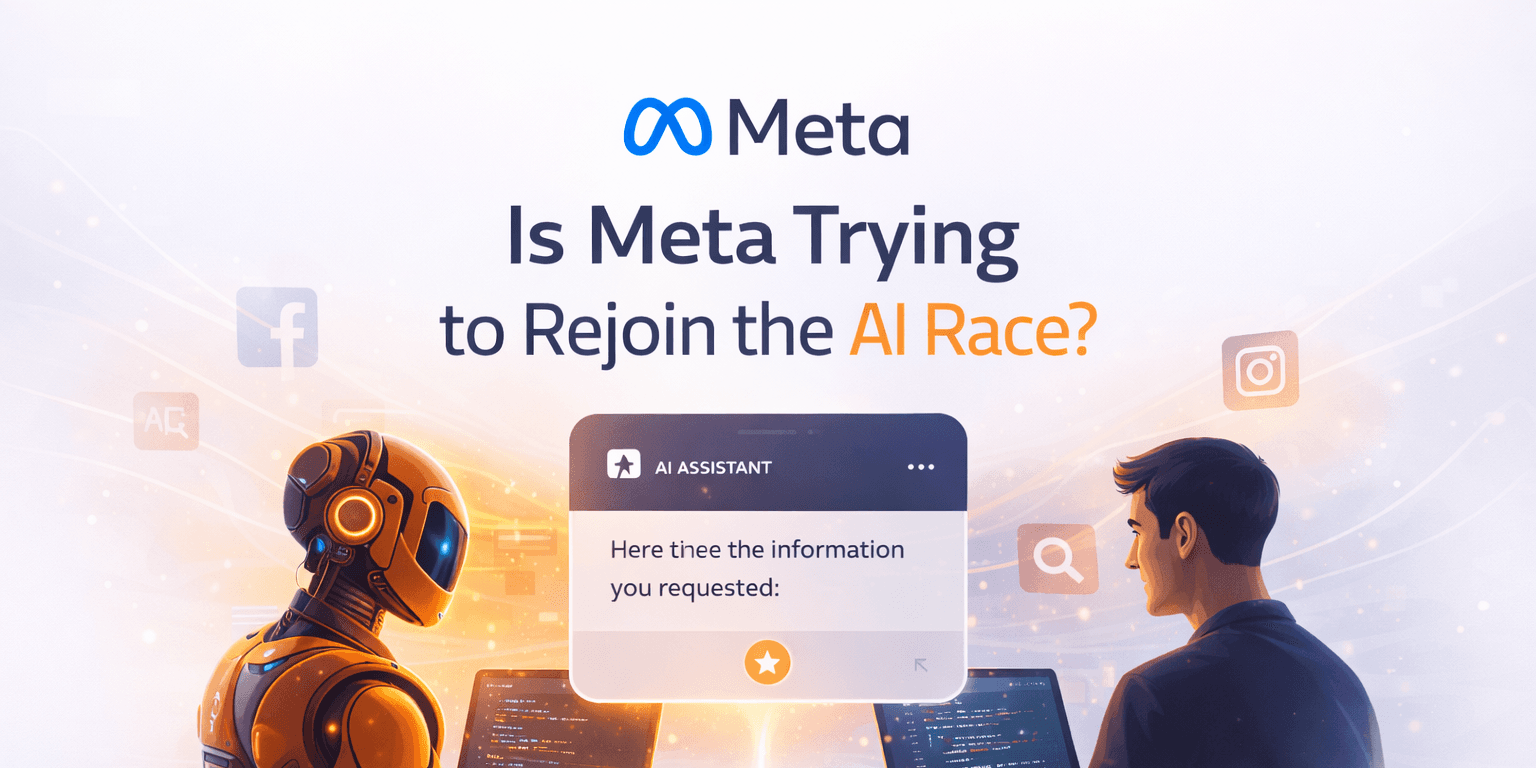
In a move that highlights the intensifying competition in artificial intelligence, Meta has announced the launch of its new model, “Muse Spark,” in what appears to be a serious attempt to re-enter a race currently dominated by companies like OpenAI and Google. This launch is not just a technical update, but a broader strategic shift that reflects Meta’s growing awareness of AI as a central pillar of its future.
The new model comes after a period of challenges for Meta in the AI space, where its previous efforts did not achieve the same level of impact as its competitors. As a result, Muse Spark represents a repositioning effort, aiming not only to participate in the race but to compete at a higher level. It is designed to integrate directly into Meta’s ecosystem, including platforms like Facebook, Instagram, and WhatsApp, rather than exist as a standalone tool.
What distinguishes this model is its focus on practical, everyday use rather than purely developer-oriented applications. Meta is not just building another chatbot, but embedding AI into the daily user experience, from content interaction to decision-making and even shopping assistance. This signals a shift in how AI is delivered, moving from isolated tools to deeply integrated systems within digital platforms.
This move also takes place within a highly competitive global landscape. Major tech companies are investing billions of dollars to develop more advanced models and establish control over what can be seen as the future digital infrastructure. Meta itself has invested heavily in building its AI capabilities, including the creation of Meta Superintelligence Labs and large-scale hiring efforts to accelerate progress.
Despite the excitement surrounding the launch, reactions have been mixed. Some analysts see Muse Spark as a significant step forward that strengthens Meta’s position, while others point out that it still lags behind competitors in certain areas such as coding and advanced reasoning. This divergence of opinions reflects the reality that the AI race is far from settled, and leadership in this space remains open.
More importantly, this event reveals something deeper about the current stage of technology. We are no longer in an experimental phase, but in a phase of building complete AI-driven systems. Companies are no longer competing solely on who has the “best model,” but on who can deliver the most effective and seamless user experience powered by AI.
At the same time, this development raises important questions about the evolving relationship between humans and technology. If AI becomes embedded in every application we use, how will user behavior change? And could we reach a point where AI becomes the primary interface between people and the internet itself?
Ultimately, the launch of Muse Spark is not just a tech headline—it is a signal of a new phase in the evolution of artificial intelligence. A phase where AI moves from being a supportive tool to becoming a core part of the digital systems we rely on every day.
And the real question is no longer: who has the best model?
But rather: who can integrate AI into everyday life in the smartest way?