
An account of how World War II codebreaking efforts accelerated computing and established theoretical foundations for artificial intelligence
The Narrative
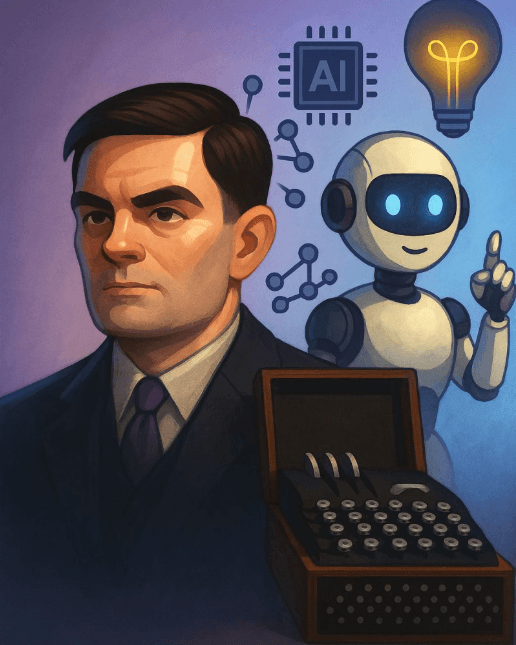
During World War II, the German Enigma machine was used to encrypt military communications, making its decryption a strategic priority for the Allies.
Alan Turing developed computational methods and machines capable of rapidly testing vast numbers of possibilities, contributing to the decryption of Enigma. These achievements shortened the war and influenced the subsequent development of computing.
Codebreaking demonstrated the power of algorithmic design to address complex problems and raised foundational questions about machine computation and intelligence. The concepts introduced then provided theoretical underpinnings for later advances in computing and artificial intelligence.